


If you have been diagnosed with sleep apnea, a CPAP machine is often the first treatment your doctor recommends. It is also a device you use every night, so the cost matters, and so does a compliance rule that catches many people off guard.
Medicare does cover CPAP therapy, but coverage starts with a trial and depends on how regularly you use the machine. Here is how the process works and what you can expect to pay.
Does Medicare cover CPAP machines?
Yes. Medicare Part B covers CPAP (continuous positive airway pressure) machines as durable medical equipment for people diagnosed with obstructive sleep apnea. Coverage begins with a 12-week trial. After you meet the annual Part B deductible, you pay 20 percent of the Medicare-approved amount and Medicare pays 80 percent, and you must use a Medicare-enrolled supplier.
Because a CPAP machine is durable medical equipment, it falls under Part B rather than Part A, and the standard Part B cost-sharing rules apply. CPAP supplies such as masks and tubing are covered the same way.
What do you need to qualify for CPAP coverage?
Medicare requires a sleep study that confirms obstructive sleep apnea before it covers a CPAP machine. The study can be done in a sleep lab or, in many cases, with an approved home sleep test that your doctor orders. You also need a face-to-face visit and a written order from your doctor.
If you already used a CPAP machine before joining Medicare and your earlier sleep test meets Medicare’s criteria, you may not need a new test, but you will need a visit to document the medical need. Our post on Medicare and sleep studies explains what the testing involves.
How does the CPAP trial period work?
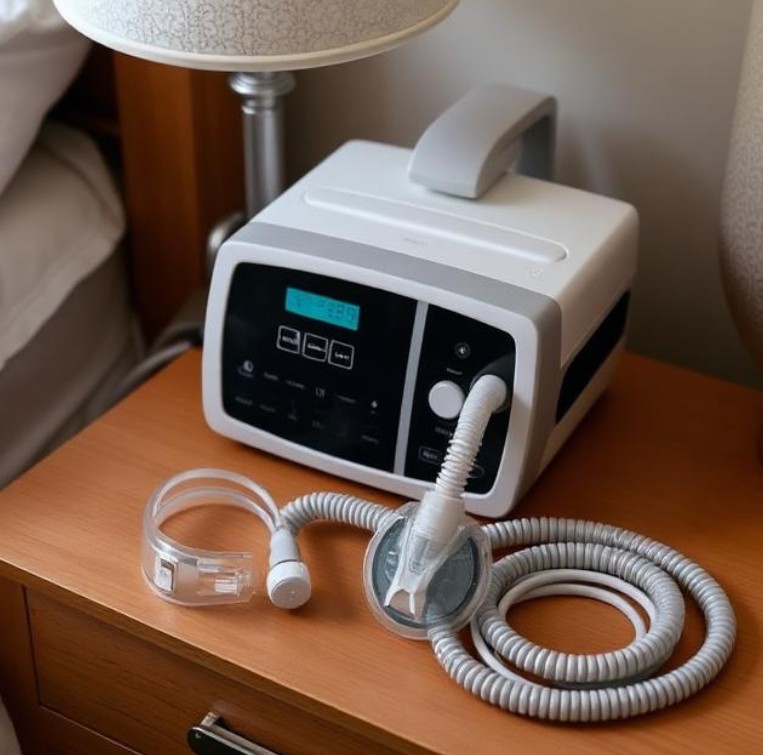
Medicare covers an initial 12-week (90-day) trial of CPAP therapy. To keep coverage past the trial, you must use the machine regularly and have a follow-up visit where your doctor documents that the therapy is helping. Medicare’s standard for regular use is at least 4 hours per night on at least 70 percent of nights during a 30-day period within the first three months.
Modern machines record this usage automatically, and Medicare relies on that data rather than self-reports. If you do not meet the usage standard during the trial, coverage can stop, and restarting may require a new evaluation and, in some cases, a repeat sleep study. If CPAP is uncomfortable, tell your doctor early, since a different mask or pressure setting often solves the problem.
Does Medicare rent or buy the CPAP machine?
Medicare rents the CPAP machine rather than buying it outright. You rent the device for 13 months of continuous use, and if you keep using it and meet the requirements, the machine becomes yours after that. The supplier maintains the equipment during the rental period.
Once you own the machine, Medicare continues to help pay for the supplies you need to use it. After about five years, Medicare may help cover a replacement machine if you still need therapy.
How often does Medicare replace CPAP supplies?
Medicare covers regular replacement of CPAP supplies, because masks, cushions, tubing, and filters wear out and become less effective over time. Replacement frequency depends on the item, and the same 20 percent coinsurance applies after your deductible.
A typical replacement schedule looks like this:
- Mask: about every 3 months.
- Mask cushions or nasal pillows: about twice a month.
- Tubing: about every 3 months.
- Disposable filters: about twice a month. Non-disposable filters: about every 6 months.
- Humidifier water chamber and headgear: about every 6 months.
Comfort or cleaning extras, such as mask liners or a separate CPAP cleaning device, are usually not covered. Our post on CPAP cleaning machines covers that in more detail.
What if CPAP does not work for me?
If you cannot tolerate CPAP, talk with your doctor before stopping, because there are other treatments and coverage rules differ for each. Medicare covers several sleep apnea treatments beyond CPAP for people who meet the criteria, including oral appliances and implanted nerve-stimulation therapy.
Inspire therapy, an implanted device for certain patients, and sleep apnea oral appliances are two alternatives Medicare may cover when you meet specific medical requirements.
Expert insight
“Most people are glad to hear Medicare covers a CPAP machine, and then they are surprised by the part that trips folks up: you have to use it enough during the first few months for coverage to continue. The machine reports your usage, so I make sure clients understand the trial period before they start. It is an easy thing to stay ahead of once you know it is coming.” – Daniel Turner, Office Manager & Agent, Mair Agency
Talk with a local agent
CPAP coverage starts the same way under Original Medicare, but what you pay can depend on whether you have a Medigap policy or a Medicare Advantage plan, and some Advantage plans require prior authorization. A licensed Mair Agency agent can walk you through how your plan handles CPAP. Contact us to learn more.
Frequently Asked Questions
Does Medicare cover CPAP machines?
Yes. Medicare Part B covers CPAP machines as durable medical equipment after a sleep study confirms obstructive sleep apnea, beginning with a 12-week trial.
Do I need a sleep study for Medicare to cover CPAP?
Yes. A qualifying sleep study, done in a lab or with an approved home test, is required to confirm the diagnosis before coverage begins.
How long will Medicare pay for CPAP supplies?
Medicare covers replacement supplies on a set schedule for as long as you use the therapy and remain eligible, with the usual 20 percent coinsurance after your deductible.
What happens if I do not use my CPAP enough?
If your usage does not meet Medicare’s standard of at least 4 hours per night on 70 percent of nights during the trial, coverage can stop. Restarting may require a new evaluation.
Does Medicare rent or buy a CPAP machine?
Medicare rents the machine for 13 months of continuous use. If you meet the requirements, you may own the machine after that period.
Does Medicare Advantage cover CPAP machines?
Yes. Advantage plans cover at least what Original Medicare covers, though some require prior authorization and your costs may differ.